

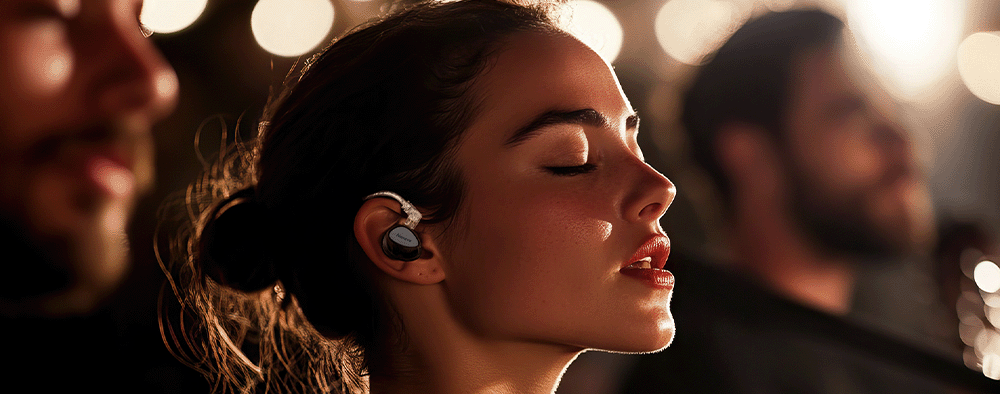
Why In-Ear Monitors Matter for Live Performance
Being able to hear clearly on stage isn't a luxury. It's an essential part of a great performance.
For decades, musicians and performers have relied on floor wedges to hear themselves, the band, and the rest of the mix. Today, more bands, churches, theaters, schools, and live production professionals are making the move to In-Ear Monitor systems—or IEMs.
Instead of filling the stage with additional speakers and competing volume, an IEM system delivers the monitor mix directly to the performer. The result is better clarity, greater mobility, lower stage volume, and a more controlled performance environment.
Solutions like the Airwave Technologies IEM-2200 and IEM-2200 Quad make it easier to bring the advantages of wireless in-ear monitoring to everything from a single performer to a complete production team.
What Is an In-Ear Monitor System?
An In-Ear Monitor system sends audio from the mixing console wirelessly to a bodypack receiver worn by the performer. Earphones connected to the bodypack allow the performer to hear their monitor mix directly rather than relying on a floor speaker several feet away.
Because the sound travels with the performer, the monitoring experience remains much more consistent as they move around the stage.
For singers, musicians, worship leaders, theater performers, and other live production professionals, that can mean hearing more of what matters and less of everything else happening around them.
1. Hear Your Mix More Clearly
Clarity is one of the biggest reasons performers switch to in-ear monitoring.
Traditional floor monitors have to compete with drums, guitar amplifiers, PA speakers, other monitors, and the overall sound of the room. Turning the monitor louder isn't always the answer. In many cases, it simply adds even more sound to an already loud stage.
An IEM delivers the monitor mix directly to the performer, making it easier to distinguish vocals, instruments, backing tracks, click tracks, and production cues.
Better monitoring can help singers stay on pitch, musicians maintain timing, and performers concentrate on the details of their performance instead of struggling to hear.
2. Reduce Stage Volume
Every monitor wedge pointed toward the stage adds more acoustic energy to the room.
Replacing or reducing floor monitors with an in-ear monitor system can significantly lower overall stage volume. That gives the front-of-house sound engineer more control over what the audience hears rather than having to compete with sound coming directly from the stage.
Lower stage volume can be especially valuable in houses of worship, theaters, schools, and smaller venues, where controlling overall sound levels is often a priority.
It can also reduce monitor sound bleeding back into vocal and instrument microphones, helping create a cleaner mix for the audience.
3. Move Freely Around the Stage
Traditional monitors work best when you're standing in the right place.
Move too far away from a floor wedge and the monitor mix can quickly change. Wireless IEM systems solve that problem by allowing the monitor mix to move with the performer.
A vocalist can cross the stage. A worship leader can move throughout the platform. A musician can change positions without losing the monitoring they depend on.
That freedom makes wireless in-ear monitoring particularly useful for energetic performances and larger stages.
4. Perform With Greater Confidence
When performers can hear themselves clearly, they don't have to spend the entire performance worrying about their monitor mix.
Vocalists can better hear pitch and dynamics. Musicians can hear timing and musical details. Worship teams can stay connected to one another. Theater performers can receive the audio and cues they need without additional speakers on stage.
The result is greater confidence and fewer distractions.
A good monitoring system should almost disappear from the performer's mind. You hear what you need and concentrate on performing.
5. Create a Cleaner Stage
Moving to in-ear monitoring can also improve the physical appearance and organization of a stage.
Fewer monitor wedges mean fewer speakers taking up valuable performance space. There are fewer cables running across the floor and fewer obstacles for performers to work around.
For churches, theaters, corporate productions, schools, touring performers, and other environments where appearance matters, removing traditional floor monitors can create a noticeably cleaner and more professional-looking stage.
6. Help Manage Listening Levels
A loud stage can expose musicians and performers to significant sound levels for extended periods of time.
Properly used in-ear monitors allow performers to hear a clear monitor signal without relying on increasingly loud floor wedges to overpower the surrounding stage noise.
Responsible listening levels are still essential. An IEM should never simply be turned up excessively because it is closer to the ear. But when properly configured and operated, in-ear monitoring can be an important part of creating a more controlled listening environment.
Airwave Technologies IEM-2200 Wireless In-Ear Monitor System
The Airwave Technologies IEM-2200 is designed to give performers the freedom and clarity of professional wireless in-ear monitoring.
Whether you're a musician, vocalist, worship leader, theater performer, or production professional, the IEM-2200 provides a practical alternative to traditional floor monitoring while allowing performers to move freely throughout their performance area.
It's an ideal solution for:
- Live musicians and bands
- Houses of worship
- Theater productions
- Schools and performing arts programs
- AV and production companies
- Corporate and special-event productions
For performers making their first move into wireless IEMs, the IEM-2200 provides a straightforward way to bring in-ear monitoring to the stage.
IEM-2200 Quad: Wireless Monitoring for Multiple Performers
When several performers need wireless monitoring, managing multiple individual systems can quickly become more complicated.
The Airwave Technologies IEM-2200 Quad provides a convenient multi-system solution based around the IEM-2200 platform.
It's particularly well suited for bands, worship teams, theaters, schools, rental companies, and production facilities that regularly need wireless monitoring for multiple performers.
Instead of piecing together a larger monitoring package one component at a time, the IEM-2200 Quad provides a more streamlined approach to building a multi-channel in-ear monitoring system.
Is It Time to Switch to In-Ear Monitors?
Moving from traditional floor monitors to an IEM system isn't simply a change in equipment. It can change the entire stage environment.
Better clarity. Lower stage volume. Greater mobility. More control. A cleaner stage.
Most importantly, performers spend less time worrying about what they can hear and more time concentrating on what the audience came to hear.
Whether you're adding your first wireless IEM system or building a monitoring setup for multiple performers, the Airwave Technologies IEM-2200 and IEM-2200 Quad offer flexible solutions for bringing the benefits of in-ear monitoring to your next performance.
